A backyard pool can feel like a personal oasis, offering relaxation, fun, and relief from the heat. But owning a pool also brings responsibilities that go beyond keeping the water clear. One often overlooked concern is how pool chemicals affect the air around the water, especially for families who spend long hours in or near the pool.
Improperly balanced water chemistry doesn’t just impact appearance—it can release airborne irritants that affect lungs and overall respiratory comfort. Whether you manage your pool yourself or hire professionals, understanding the connection between pool care and air quality is essential.
How Airborne Irritants Form Around Pools
Most safety discussions center on visible hazards such as slick decks or deep water. Yet what’s floating in the air can be just as important, particularly for indoor pools or outdoor pools in enclosed areas where ventilation is limited.
Several issues can contribute to reduced air quality:
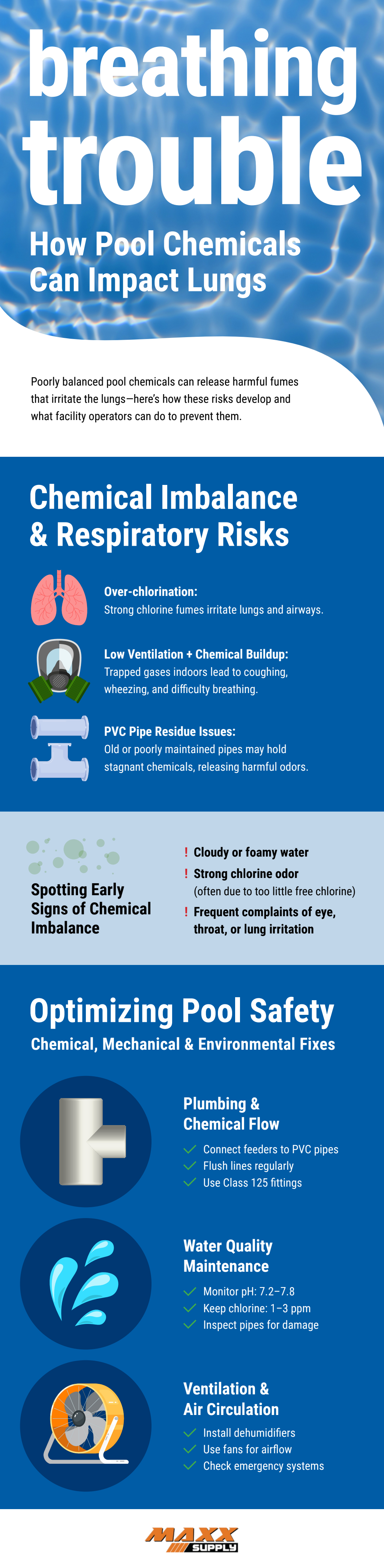
- High Chlorine Concentrations
Chlorine is necessary for sanitation, but an excess can create fumes that irritate the lungs. These vapors may cause coughing, wheezing, and chest discomfort—effects that are often more intense for children, swimmers with asthma, or those sensitive to chemical odors. - Poor Ventilation
Even when chlorine levels are technically “within range,” lack of airflow can trap disinfectant byproducts. In enclosed environments, these airborne compounds linger and can cause ongoing irritation. - Chemical Residue in Plumbing
Older plumbing lines, particularly those made of PVC pipes, can hold residual chemicals that release odors or irritants when water flow or temperature changes. Using durable, chemical-compatible fittings from reputable manufacturers can reduce residue accumulation.
Warning Signs That Your Pool Area Needs Attention
Your senses often provide the earliest clues that something isn’t right. Keep an eye out for:
• Cloudy or foamy water, which may indicate contamination or imbalance
• A strong “chlorine smell,” which usually signals the presence of chloramines—not fresh chlorine
• Frequent swimmer complaints of irritated eyes, sore throats, or coughing
These signals suggest it’s time to adjust your system or inspect equipment.
How to Improve Air Quality Around Your Pool
Keeping your pool environment healthy requires more than balancing water chemistry. A comprehensive approach helps protect both swimmers and the people relaxing nearby.
- Optimize Plumbing and Chemical Distribution
• Flush lines regularly to remove chemical buildup
• Select chemical-resistant fittings such as Class 125 components
• Ensure dosing systems feed chemicals directly into circulation lines for even distribution - Maintain Proper Water Chemistry
• Keep pH levels between 7.2 and 7.8
• Maintain chlorine between 1 and 3 ppm
• Inspect plumbing and equipment before peak swimming season - Improve Ventilation and Air Movement
• Use dehumidifiers for indoor or covered pools
• Allow for natural airflow through fans or open structures
• Verify that emergency exhaust systems are working properly
Clean Water Matters—But Clean Air Matters Just as Much
A pool can be an incredible asset to your home, offering enjoyment and connection for family and guests. But it’s important to remember that healthy swimming conditions depend on more than clear water. With regular equipment care, balanced chemistry, and improved airflow, you can create a pool area that supports fresh, safe air as well as sparkling water.
By paying attention to both what’s in the water and what’s in the air, you ensure your pool remains a source of comfort—not an unexpected source of respiratory stress.