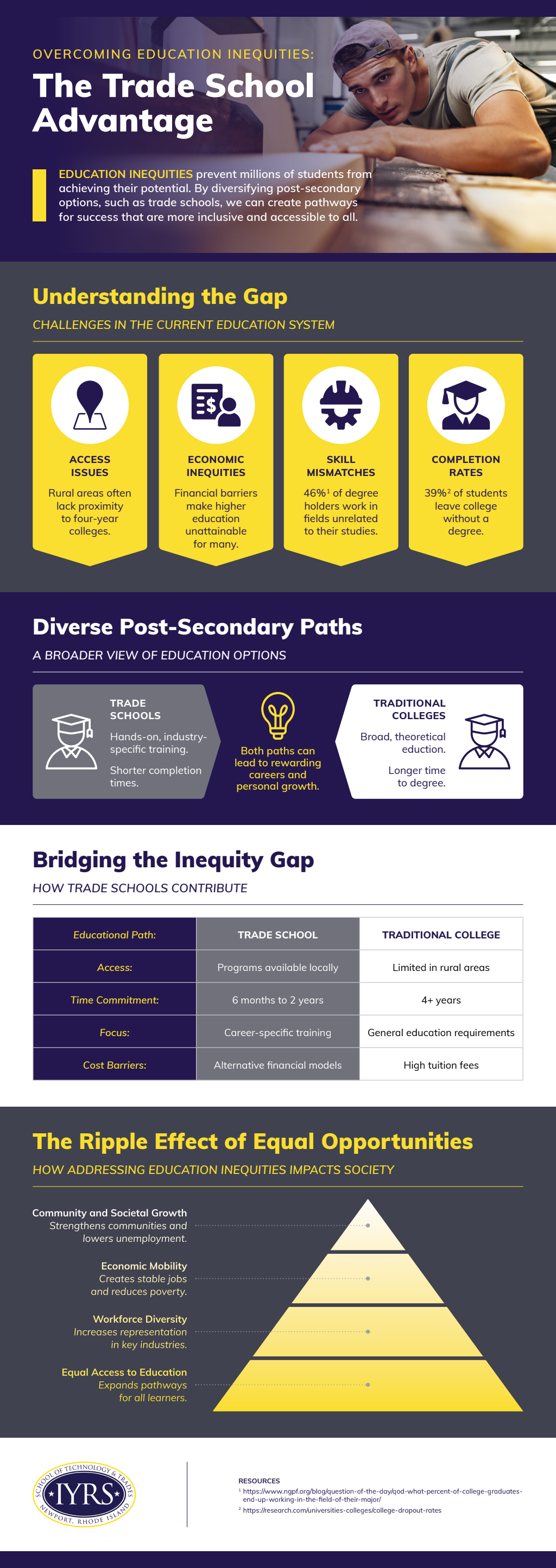
Educational inequality continues to restrict opportunities for many students nationwide. Financial barriers, limited access to quality programs, and uneven learning environments often prevent individuals from advancing through traditional academic routes. While four-year universities are commonly viewed as the primary path to success, that model does not work for every learner. For many students, options like trade schools, apprenticeships, and community colleges provide more practical, affordable, and effective ways to build a secure future.
Trade schools have become especially valuable for students seeking career-focused, hands-on education. These programs deliver targeted training in areas such as healthcare, skilled trades, and information technology. Unlike traditional colleges that emphasize broad academic coursework, trade schools concentrate on developing specific skills tied directly to workforce demand. For students from underserved communities, this alignment with real job opportunities can lead to faster employment and stronger long-term economic stability.
That said, vocational education alone cannot solve the deeper issues behind educational inequity. Closing these gaps requires layered solutions that reflect local realities. Mobile training programs, online certifications, and partnerships between employers and educational institutions can extend access to students who may be limited by location or resources. These flexible approaches help ensure learning is not confined to a single campus or traditional classroom setting.
Public perception is another important factor. Career and technical education has often been undervalued or misunderstood, despite strong outcomes in job readiness and placement. Sharing success stories and increasing awareness of modern trade careers can help students and families better understand the opportunities these programs provide.
Policy decisions also influence access. Expanding financial aid, investing in vocational infrastructure, and encouraging industry involvement in curriculum development can make trade education more accessible and relevant. Mentorship and career guidance further support students by helping them navigate options and stay engaged throughout their training.
There is no single answer to educational inequality, but expanding vocational pathways is a meaningful step forward. By increasing the visibility and accessibility of trade-focused education, communities can support a broader range of learners and build a stronger, more inclusive workforce.